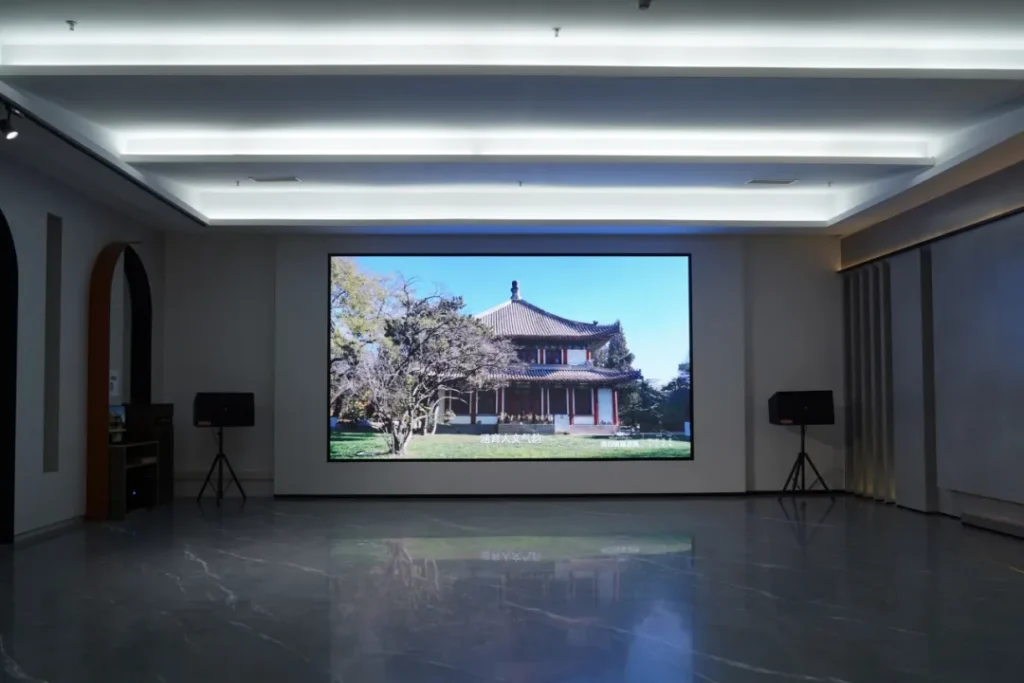

When choosing an LED display, one of the most important decisions is the technology behind the LEDs themselves. Two of the most common options are COB and SMD.
At first glance, both may seem similar. In reality, they differ significantly in durability, image quality, viewing experience, and long-term performance.
Choosing the wrong technology can lead to higher maintenance, lower visual quality, or unnecessary cost.
This guide explains the differences between COB and SMD LED technology so you can choose the right option for your application.
What is SMD LED
SMD stands for Surface Mounted Device.
In SMD technology, individual LED chips for red, green, and blue are mounted on the surface of a circuit board. Each pixel is made up of these separate components.
SMD is the most widely used LED technology in the display industry.
It offers:
- Good brightness levels
- Wide viewing angles
- Cost-effective production
- Flexibility across applications
Because of its versatility, SMD is commonly used in both indoor and outdoor LED displays.
What is COB LED
COB stands for Chip on Board.
In COB technology, multiple LED chips are directly mounted onto the circuit board and covered with a protective layer. Instead of individual visible diodes, the surface appears more uniform.
COB is a newer technology designed to improve durability and visual performance.
It offers:
- Higher protection against damage
- Smoother visual appearance
- Improved reliability
- Better performance in fine-pitch displays
COB is mainly used in high-end indoor applications where quality and durability are critical.
Key Differences Between COB and SMD LED
Visual Appearance
SMD displays show individual LED points, especially at close viewing distances.
COB displays have a more uniform surface, which reduces visible pixelation and creates a smoother image.
For close viewing environments, COB often looks more refined.
Durability and Protection
SMD LEDs are exposed on the surface, making them more vulnerable to physical damage, dust, and moisture.
COB LEDs are protected by a coating, which makes them more resistant to impact and environmental factors.
This makes COB more suitable for environments where durability is important.
Pixel Pitch and Resolution
COB technology is better suited for ultra-fine pixel pitch displays. It allows tighter LED placement, improving resolution and clarity.
SMD is widely used across a broader range of pixel pitches but may struggle to match COB performance in extremely fine-pitch applications.
Brightness and Viewing Angle
SMD displays typically offer higher brightness and wider viewing angles, especially in outdoor environments.
COB displays provide excellent uniformity but may have slightly lower peak brightness depending on the implementation.
Maintenance and Repair
SMD displays are easier to repair because individual LEDs or modules can be replaced.
COB displays are more complex to repair due to their integrated structure. However, they often require less maintenance because of better durability.
Cost Differences
SMD is generally more cost-effective and widely available.
COB technology is more expensive due to advanced manufacturing processes and higher performance characteristics.
The choice depends on whether you prioritize budget or premium quality.
COB vs SMD: Performance Comparison
Image quality depends on more than just pixel pitch.
COB displays provide:
- Better surface uniformity
- Reduced glare
- Improved contrast perception
SMD displays provide:
- Higher brightness for outdoor visibility
- Strong performance across various applications
In high-end indoor environments, COB often delivers a more premium viewing experience.
Where SMD is the Better Choice
SMD is ideal for:
- Outdoor LED billboards
- Large-scale video walls
- Budget-conscious projects
- Applications requiring high brightness
Its flexibility and lower cost make it the most common choice in the market.
Where COB is the Better Choice
COB is ideal for:
- Indoor fine-pitch displays
- Control rooms
- Broadcast studios
- Corporate environments
It is especially useful where viewers are close to the screen and visual quality matters most.
Real-World Example
A corporate office installs an SMD display with fine pixel pitch. While it performs well, close viewing reveals visible LED points and slight glare.
Another office installs a COB display with similar specifications. The image appears smoother, with better uniformity and a more premium feel.
Both displays work, but the viewing experience is noticeably different.
Other Factors That Matter
COB vs SMD is not the only decision factor.
Display quality also depends on:
- LED binning
- MacAdam ellipse tolerance
- Calibration
- Uniformity control
A well-built SMD display can outperform a poorly designed COB display.
Technology alone does not guarantee quality.
Common Mistakes to Avoid
Assuming COB is always better is a mistake. It is better in specific applications, not all.
Choosing SMD without considering durability can lead to maintenance issues in demanding environments.
Ignoring other factors like binning and calibration results in poor overall performance regardless of technology.
How to Choose Between COB and SMD
Start by defining your application.
For outdoor use, high brightness, and cost efficiency, SMD is usually the better option.
For indoor environments, close viewing, and premium visual quality, COB is often the better choice.
Balance budget, performance, and environment to make the right decision.
Key Takeaways
COB and SMD are two different LED technologies with distinct advantages.
SMD is versatile, cost-effective, and widely used. COB offers better durability and improved visual uniformity for high-end applications.
The best choice depends on your specific use case, not just the technology itself.
Final Thoughts
Choosing between COB and SMD is not about picking the latest technology. It is about selecting what fits your requirements.
Understanding the differences helps you avoid unnecessary cost and ensures your display performs as expected.
If you make the right choice, you get better durability, consistent quality, and long-term value.